

11_27_2025

Summary

This article addresses the crucial issue of water quality, explaining how the responsibility for its safety is shared between different actors. The chain of responsibility is analysed: from the waterworks manager, responsible up to the meter, to the homeowner or condominium administrator, responsible for the internal system (the 'last mile”). With the introduction of the new D.Lgs 18/2023, the figure of the Internal Water Distribution Manager (GIDI) is defined, who has precise obligations of risk assessment and management. The article explores the potential hazards (biological, chemical, physical) that can arise in the private network and emphasises how DKR acts as a strategic partner to ensure water quality at the point of use, offering technology and advice to fulfil regulatory obligations.


We turn on the tap and expect that the water that comes out of it is pure, safe and tastes good. This trust is well placed, thanks to a system of strict controls and European and national regulations that guarantee very high standards. But who exactly is the guarantor of this quality? The answer is more complex than you think. The journey of water from source to our glass is a long one and the responsibility for its safety is a chain involving several links, each with precise duties.

With the entry into force of the new Legislative Decree 18/2023, repealing the previous Legislative Decree 31/2001, the regulatory framework has evolved, placing even more emphasis on risk assessment and liability in the last, critical stretch of distribution: that within buildings.

The first guardian: the waterworks operator

The first and most important person responsible for water quality is the water utility. Whether it is a public or private company or a partnership, its task is to ensure that the water meets all legal parameters up to the point of delivery, i.e. to the building's meter.

To do so, the manager is subject to a double level of control:

  • Internal controls: are analyses and monitoring that the operator is obliged to perform on a regular basis throughout the entire supply chain, from capture to treatment, up to the distribution network.
  • External controls: are the inspections and sampling carried out by the competent health authorities (such as the ASP - Aziende Sanitarie Provinciali) to certify the suitability of water for human consumption.

This system ensures that the water that reaches our meter is healthy and safe. But its journey is not yet over.
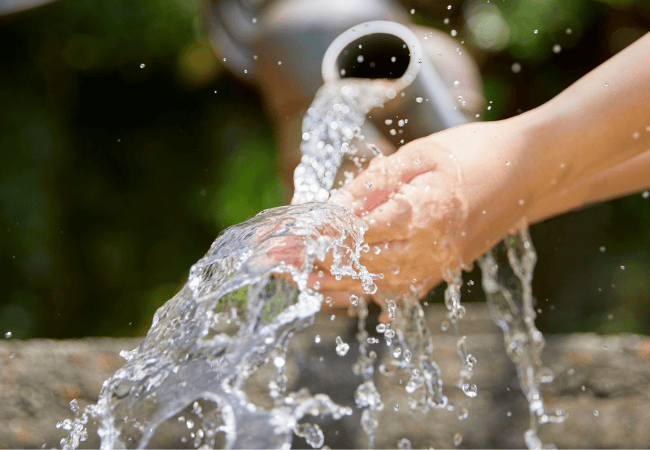
water quality who is responsible?

The 'last mile”: the critical stretch where quality can change

From the meter to the tap begins what is called the 'last mile”: the water system inside the building. The responsibility for this section lies with the owner of the building or, in the case of apartment blocks and public premises, their manager. It is now widely recognised that water quality can undergo significant changes precisely at this stage. The risks can be of three types:

  1. Biological hazards: Old pipes, unmaintained storage tanks or stagnation phenomena (standing water) can encourage the formation of biofilm and the proliferation of microorganisms. The best known of these is Legionella, a bacterium that proliferates in stagnant water conditions. The environments most at risk are seasonal facilities such as hotels or holiday homes, where long periods of closure (several months) create ideal conditions for its growth. In the domestic environment, the risk is generally lower, but can occur in the presence of unused pipes or “dead branches” of the water system still connected to the network. Transmission occurs mainly through inhalation of contaminated aerosols.
  2. Chemical hazards: unsuitable or obsolete materials can release harmful substances. The most common case is old lead pipes, but corrosion can also release metals. Furthermore, poor management of any internal treatments (e.g. softeners) can alter the chemical composition of the water.
  3. Physical dangers: the detachment of sediment, rust or limescale from the inside walls of pipes can cause turbidity, altering the colour and taste of water and potentially carrying microorganisms.

A new era of responsibility: Legislative Decree 18/2023 and the figure of the GIDI

The new Legislative Decree 18/2023 transposed the most recent European directives, introducing an approach based on risk assessment and management (in line with the Water Security Plans - PSA) and defining a new key figure: the GIDI (Internal Water Distribution Manager).

When is the GIDI necessary?

The regulations identify priority buildings where the GIDI becomes mandatory, according to a precise classification:

  • Health and social care facilities (category B): hospitals, rehabilitation and social welfare centres
  • Accommodation facilities (category C1): hotels, farmhouses and airports
  • Public and collective catering (category C2): company, public, private and school canteens
  • Public buildings and institutes (category E - priority buildings): apartment blocks, offices, schools and businesses

For these priority facilities, the GIDI is the entity responsible for the internal water system and has the formal obligation to:

  • Assessing and managing the risks of your plant
  • Take preventive and corrective measures to ensure water quality
  • Ensuring material conformity and proper maintenance

This means that the condominium administrator (in priority category E buildings) is no longer just an expense manager, but a true guarantor of water safety for residents. Similarly, the school manager becomes responsible for the safety of the water supplied to the students.

The chain of responsibility at a glance

For the sake of clarity, here is who is responsible and for which section of the water route:

  • Aqueduct OperatorIt guarantees the quality of the water from the source to the building's meter.
  • Private homeowneris responsible for the maintenance and safety of the indoor water system, from the meter to each individual tap in his or her home.
  • GIDI in priority buildings (condominium administrator, school manager, manager of a healthcare or accommodation facility): has legal responsibility for the building's internal water supply system, including common parts, tanks and autoclaves. In buildings with several residential units, the responsibility extends up to the connection point of the individual flats; in priority public and commercial facilities (categories B, C1, C2, E), it covers the entire system up to the supply points.
  • Owner of a public establishment (OSA - Operatore del Settore Alimentare)is responsible for the internal water system of his or her business. This applies to restaurants, bars, canteens and all activities that handle food. If water is treated (filtration, carbonation, etc.), the FBO must ensure its safety according to HACCP regulations.
  • Public body operating water houses or public fountainsLike GIDI, it is responsible for the installation, maintenance and safety of these systems in its territory.

DKR: the strategic partner for 'last mile” management”

While the responsibility of the homeowner is limited to the private sphere, it is in the condominium, public and commercial spheres that the new legislation introduces precise and sanctionable legal obligations. And it is here, where water quality management becomes a formal responsibility and no longer just good practice, that DKR steps in as a strategic partner for FBOs (Food Industry Operators).

Our role is to specifically support these figures in their new and complex task, through a two-pronged approach:

  • Provide the appropriate technology: our systems - which include office dispensers and Horeca sector, water dispensers for schools and the aforementioned water houses - are designed to act as a final safety barrier. Installed at the point of use, they ensure that the water delivered is always excellent, eliminating any contaminants released by the internal system and thus protecting the operator from any risk.
  • Offering expertise and regulatory support: we help our customers (such as Horeca business owners, school managers and public authorities) to understand and fulfil their new obligations. We advise on the drafting of HACCP self-control plans, establish certified and traceable maintenance programmes, and ensure that each plant always operates at peak efficiency, in full compliance with the law.

Water quality is a shared responsibility. Thanks to an increasingly careful regulatory framework, it is now possible to ensure maximum safety at every stage of its journey. Choosing a partners such as DKR means taking control of the 'last mile” in public delivery contexts, turning a legal obligation into a guarantee of excellence for its citizens, employees, students and customers.

en_GBEnglish
