


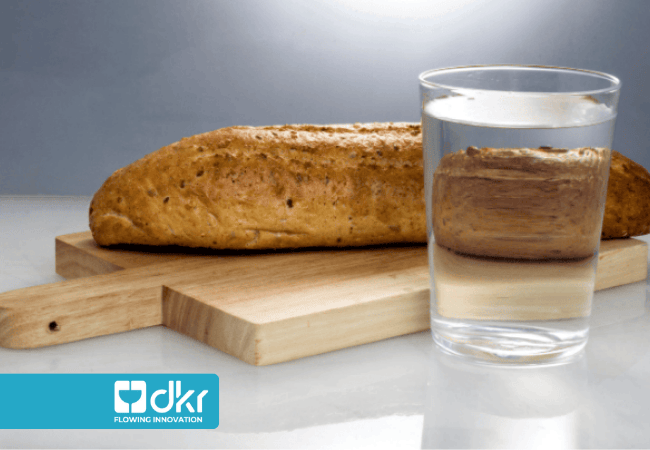
This article explores the complex question of whether water as food is a valid concept. Two distinct perspectives are analysed: the nutritional and the legal. From a nutritional point of view, water is to all intents and purposes a food, essential for vital functions, hydration and the supply of minerals, as confirmed by EFSA. From a legal point of view, on the other hand, European and Italian regulations distinguish water from food, unless a specific condition occurs: when water is treated (filtered, carbonated) and supplied to the public, as in the case of Water Houses or dispensers in catering. In this case, whoever supplies it becomes a Food Business Operator (FBO), with precise regulatory obligations, including the adoption of an HACCP plan. This article clarifies this boundary, positioning DKR as a competent partner that guides its customers in the correct management of the 'water food”.
Steak? Food. Tortellini? Food. Water? Here, the answer that seemed obvious suddenly becomes uncertain. There are in fact two currents of thought, both with solid arguments, that define water in different ways. For some, water does not provide energy (calories) and, although it is the most indispensable substance for life, is not a food in the strict sense. For others, thanks to the minerals it carries and its role in every metabolic process, it is a nutrient in its own right.
The truth is that both positions are correct, because the assessment changes radically depending on the perspective: it is one thing to consider water as a foodstuff from a biological and nutritional point of view, it is quite another to analyse it from a legal point of view. And it is precisely on this boundary that a fundamental game is played for those who, like DKR, are involved in designing, installing and maintaining water treatment and supply systems for the public.
From the point of view of nutrition science and biology, there is little doubt: water is a food. Not surprisingly, it is found at the base of the food pyramide, symbolising its irreplaceable and fundamental role in the physiology of the human body. Its functions have been extensively studied and certified by the highest scientific authorities:
It is important to point out that drinking water is not our main source of minerals (it is estimated to contribute between 1% and 20% of our total requirements), a role played primarily by solid food. However, its contribution is not negligible and its role as a ’carrier“ of these nutrients is indisputable. Biologically speaking, considering water as a food is not only correct, it is a necessity.
If the science of nutrition is clear, the law draws a confine much sharper, specific and, in some ways, counterintuitive. European legislation (EC Reg. 178/2002) and the Italian transposing legislation make a clear distinction between the legal regime for water and that for foodstuffs. Generally speaking, and to avoid overlapping, the’drinking water supplied by the aqueduct is not considered a foodstuff and follows its own specific and strict reference legislation (mainly Legislative Decree 31/2001, which transposes European Directive 98/83/EC).
However, there is one fundamental exception that completely changes the game. Water legally becomes a foodstuff the moment it undergoes two joint actions:
This is exactly the case with the Water Houses installed in municipalities, which deliver micro-filtered water to citizens, or professional dispensers installed in restaurants, bars, canteens and hotels. In this precise context, water ceases to be a simple commodity supplied by the public network and to all intents and purposes takes on the status of “food”, because an operator actively intervenes to modify its characteristics and administer it to third parties. It is here that the concept of water as food becomes a legal and operational reality.
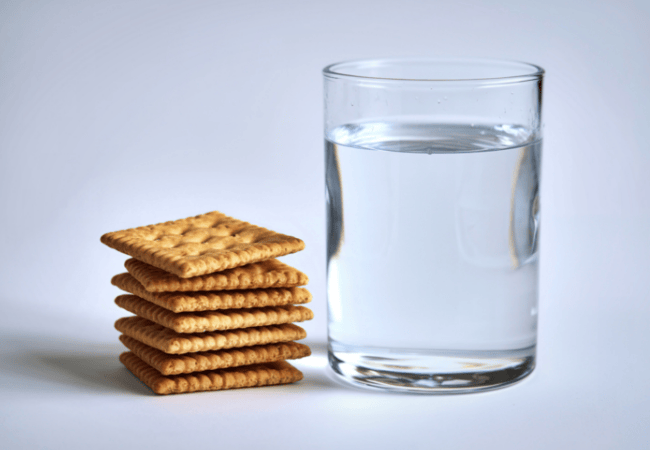
This legal transformation has a very important consequence: whoever treats and supplies water to the public becomes, to all intents and purposes, a FBO (Food Business Operator). As such, it is no longer sufficient to ensure that the water complies with basic potability parameters, but is required to comply with a series of additional regulations designed to protect the health of the end consumer.
The main regulations involved are:
Becoming a FBO for the management of water as food results in precise and non-delegable obligations:
So, is water a food? The answer is: it depends. But for a municipality installing a Water House or a restaurateur choosing a professional dispenser for its customers, the legal answer is a clear and unequivocal “yes”.
Understanding this distinction is not a mere exercise in style, but is fundamental to operating in full compliance, with security and professionalism. In DKR, our mission goes beyond providing state-of-the-art water treatment technology. We offer our customers the expertise and advice they need to address these regulatory complexities and properly manage water as food. Our support comes in the form of helping define effective maintenance plans, providing clear documentation and guiding our partners to comply with all legal obligations, turning a potential bureaucratic burden into a solid guarantee of quality and safety for the end user. Managing water as food is a big responsibility, and we are here to share it.

Via Grigna, 60 - 20027 Rescaldina (MI) - ITALY
Tel. +39 0331 54 94 67 - Fax +39 0331 54 49 01
info@dkr.it - dkr@pec.it



 English
  Italian
  Spanish
  French