
Le parole più frequenti usate nell’ambito delle case dell’acqua and cold beverage dispensers
Sempre più spesso si sente parlare di “Acqua del Sindaco”, ma che cos’è veramente? Si tratta, in realtà, della cosiddetta..
More and more often we hear about “Mayor’s Water”, but what exactly is it? In reality, it is the so-called “Faucet Water”. It is called Mayor’s Water because, especially in the last 20 years, more and more municipalities have offered and continue to offer a service of good, safe and controlled water to their citizens through dedicated systems called “Water Houses”. Thanks to these modern public fountains, Italians are rediscovering the water from the tap.
Taste, lower cost and a greater affinity for environmental issues are bringing more and more people closer to using water from km 0. According to a study conducted by Open Mind Research on the occasion of World Water Day (March 22), 73.7% of the population chose the mayor’s water in 2017 and 44% use it on a regular basis now.

Potabile è un’acqua che si può bere senza pregiudizio per la salute umana. Sin dall’antichità l’uomo ha sempre posto particolare..
Potable water is water that can be drunk without prejudice to human health. Since ancient times, man has always paid particular attention to the quality of the water he drinks, and over the years more and more scholars have been involved in determining the criteria for its suitability for human consumption. Scientific progress and the skills acquired over the years have made it possible to safeguard human health in an increasingly targeted manner; increasingly sophisticated laboratory instruments have enabled the detection of types of substances and microorganisms unknown, thus pushing knowledge to ever more profound levels.
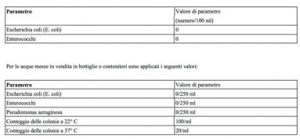
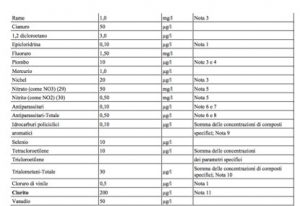
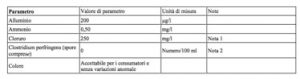
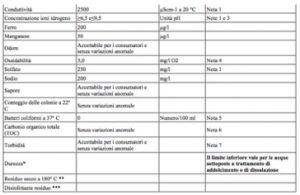
Commonly, the term “potable water” is associated with water distributed by the water pipeline, which must not contain microorganisms and parasites, nor other substances in quantities or concentrations such as to pose a potential danger to human health. To ensure and above all protect human health, the European Community has clearly defined 56 monitoring parameters, setting a concentration limit or an undesirable value for each one. The parameters are thus divided as follows (Legislative Decree 31/2001, implementing Directive 98/83/EC on the quality of water intended for human consumption).
Microbiological parameters
Chemical parameters

Indicator parameters

Radioactivity
L'acqua (H2O) è un composto chimicamente semplice, formato da due atomi di idrogeno ed uno di ossigeno. Durante il suo..
Water (H2O) is a chemically simple compound, composed of two hydrogen atoms and one oxygen atom. During its natural cycle, water travels a very long distance both in the air (rain, snow) and on the ground, flowing to the surface or into the subsurface. It is precisely during this phase that it comes into contact with elements and substances and loses its natural purity, acquiring unique characteristics typical of the areas of origin. Absolute purity therefore remains a definition, an objective; there are no truly pure waters in nature and those commonly considered to be such actually contain very low levels of contamination.
In any case, for “daily drinking” a quality water that meets today’s standards of potability is sufficient. In many commercial sectors concerning the definition of “Pure Water”, fraud against end consumers is reported; one of the most common ways to sell home reverse osmosis water purifiers involves the electrolysis test, a sales technique implemented by some door-to-door sellers of reverse osmosis systems.
L’arsenico è un elemento chimico presente in natura soprattutto nei territori in cui è presente un terreno di origine vulcanica..
Arsenic is a chemical element present in nature, especially in areas where there is volcanic soil because it is rich in minerals. In these areas, the water supplied to the homes of the citizens generally has a concentration of arsenic above the limits allowed by the European Union. To alleviate the inconveniences of the population living in these areas, it has been resorted to the installation of Water Houses, which are used as if they were decentralized mini-purifiers on the affected territories. In the water supply systems of the Water Houses, in order to bring the arsenic within the permitted limits, specific filtration systems are installed, such as those that exploit the properties of adsorbent minerals, reverse osmosis, or ion exchange resins.
In order to ensure a constant supply of compliant water, the Water Houses undergo regular maintenance and sanitization visits carried out by specialized technical personnel. During the maintenance operation, all water circuits and all parts that come into contact with the water are sanitized; when necessary, the filtration systems are replaced with new ones.
Activated charcoal is used to adsorb odours and tastes from water intended for human consumption and is widely used...
Activated carbon is used to adsorb odors and flavors from the waters intended for human consumption and is widely used in the filtration systems of the Water Houses. The activated carbons can be of plant or mineral origin and come in the form of granules contained within a cartridge, through which the water to be treated is passed. The carbon has the ability to adsorb odors and flavors on its surface, so it is used in the Water Houses’ delivery systems in order to remove odors and flavors that might be unpleasant to the end user.
At the end of its life, coal can release the substances previously retained within it. In order to prevent this release, the coal must be replaced periodically. The replacement will be carried out during maintenance operations of the Water House by specialized technical personnel.
Le Case dell’Acqua chiamate anche Punti Acqua, Fontanelli, Distributori Pubblici, Rubinetti Frizzanti, sono impianti di distribuzione acqua potabile (conforme al..
"Water Houses", also known as Water Points, Public Taps, or Sparkling Faucets, are systems for dispensing drinking water (compliant with Legislative Decree 31/01). They are installed in specific structures often located in public squares or urban areas. The water dispensed can be chilled, still, and/or sparkling, for a fee (coins and/or cards, key fobs), with controlled access (e.g. Regional Services Card), or free of charge.
Public fountains have always accompanied man in his evolution, always playing a fundamental role in providing drinking water to the population. Running water, which we all take for granted today, is one of the privileges acquired with modern times and in the past was intended for the few. Only in recent times, and particularly after the Second World War, has the spread of affluence gradually brought the water supply inside homes and the utility of classic fountains has lost its primary significance as a “source”. The so-called “Fountains of the Third Millennium” are logistic-architectural solutions that offer a wide range of choices, colours and shapes, with technical solutions that can be customised to create, not a simple dispenser, but a meeting and socialising point, perfectly immersed in the surrounding environment. They have thus become, over time, a real place of aggregation and meeting, in increasingly extended and decentralised urban agglomerations. In fact, Water Houses are not to be understood as just replacements for the classic drinking fountains or “vedovelle”, but rather as an opportunity, an eco-sustainable alternative, especially to PET water.
The "Water Houses" are intended to replace the consumption of bottled water, leading to significant savings for both the environment and end-users. In some areas, such as the metropolitan cities of Milan and Turin, Water Houses are widespread.
Our company currently has more than 700 installations to its name and is continuously growing.
The build quality of the systems, combined with proper maintenance and careful after-sales management (HACCP and qualified suppliers) with checks by competent authorities (Municipality and ATS/ASL), are fundamental elements for guaranteeing the end user a food-safe supply.
Il regolamento Comunitario n. 178/2002 stabilisce che “si intende per alimento o prodotto alimentare qualsiasi sostanza o prodotto trasformato, parzialmente..
European Regulation No 178/2002 states that “”food' or 'foodstuff' shall mean any substance or product, whether processed, partially processed or unprocessed, intended to be, or reasonably expected to be, ingested by humans". This means that even gases, if intended for human consumption, are considered foodstuffs, ingredients, or food additives. Food gases must not render the food harmful to human health and therefore unsuitable for human consumption. The law provides for specific requirements to be met in the marketing of food gases, in detail:
– the labeling of gas and its cataloguing;
– the traceability of the raw material and the destination of the product;
– the satisfaction of certain specific criteria of purity;
– the registration of the facilities in which the companies that process gas for food use operate;
– and finally hygiene with respect to general and specific rules in order to guarantee a high level of protection for the final consumer.
Several studies have shown that sparkling water promotes better gastric emptying and therefore better digestion. An increasing number of citizens prefer water with added CO2 to still water. In most of the "Case dell'Acqua" (Water Houses) installed, it is possible to draw both still and sparkling water. In fact, inside the facility, there is a tank (minibulk) that is periodically refilled with CO2 to guarantee a continuous supply of sparkling water.
HACCP (an acronym for Hazard Analysis and Critical Control Points, which can be translated into Hazard Analysis and Critical Control Points) is a system of risk analysis and control ...
HACCP (an acronym for Hazard Analysis and Critical Control Points, translatable as the system of risk analysis and critical control points) is a set of procedures designed to guarantee food safety, based on prevention rather than analysis of the finished product. Its objective is to identify critical points and points of possible bacterial contamination in a facility and, once identified, to implement procedures aimed at the correct prevention of contamination.
Indications for correct maintenance activities are also part of HACCP procedures. The HACCP document, issued by a food technologist, must be included mandatorily among the documents for the opening of a food-type business such as a Water House. In the field of water houses, the definition of a correct HACCP plan is fundamental to guarantee food safety, as it is necessary to consider that the quality of the dispensed water directly involves the health of the end-users who obtain water from the water house daily.
The HACCP Self-Monitoring Manual must be personalised for each individual facility and must contain all operations necessary to manage daily activities and any emergency procedures, including non-conformity logs.
La legionella è un batterio di cui esistono circa 50 specie diverse. Il batterio si annida negli ambienti acquatici naturali:..
Legionella is a bacterium of which there are around 50 different species. The bacterium lurks in natural aquatic environments: spring waters, rivers, lakes, mud, etc. From these, they reach artificial water systems which can act as amplifiers for the bacterium. Conditions that favour its proliferation in artificial environments include temperatures between 20 and 45°C, the presence of an aerobic environment and the presence of nutritional factors such as scale and organic materials.
In the water networks of our cities, there are critical elements that favour the development of Legionella. The presence of stagnant areas and blockages, encrustations and limescale deposits, extended pipework with junctions and dead ends, storage tanks and recycling systems, and wear and corrosion of the networks are all factors that encourage the development of the bacterium that causes water stagnation. Some of the operations carried out to reduce and monitor Legionella include descaling and removal of biofilm (a film created by an aggregation of microorganisms), prevention of pipe corrosion, and removal of any dead ends that allow water to stagnate.
To counter bacterial proliferation, point-of-use filtration, backflushing operations, heat treatments, or UV irradiation can be carried out. Finally, a shock chlorination of the water can be performed. To prevent the development of Legionella within the supply systems of the "Case dell'Acque" (Water Houses), regular maintenance and sanitisation of the systems by specialised technical personnel must always be carried out.
Con la parola manutenzione si intende l’insieme di operazioni che consentono di mantenere efficiente una Casa dell’Acqua ed in generale..
The word maintenance refers to the set of operations that keep a Water House and, in general, a beverage dispensing system efficient. A system that is not correctly maintained and poorly managed can worsen the quality of the incoming water, which is unacceptable. Periodic maintenance is a matter of great importance, and Ministerial Decree 25/2012 is very clear on this. In the section concerning instructions, it is specified that all advertising and informative material for the equipment must bear the following warning: “Attention: this equipment requires regular periodic maintenance to guarantee the potability requirements of the treated drinking water and the maintenance of the improvements declared by the manufacturer.” However, it is worth noting that simply replacing the filters does not guarantee the effectiveness of maintenance.
Maintenance can indeed be ordinary, meaning with a predefined schedule of checks and operations necessary for correct functioning, or extraordinary, which includes interventions arising from non-compliance, disasters, or breakdowns.
Maintenance must be carried out by qualified and specialised personnel. Over the years, our company has always provided thorough staff training in terms of food safety, covering both correct hygiene practices and water microbiology, so that all operations are performed with a high degree of operator care and awareness. Water is, in fact, considered a foodstuff in all respects and as such requires care and attention.
Maintenance is absolutely of fundamental importance and aims to guarantee optimal operating conditions.
Our company, thanks to a close collaboration with a qualified Food Technologist, draws up a detailed maintenance plan for each individual system, based on the specific characteristics of the mains water, the type of system and its use.
Maintenance is subject to specific legislation: D.M. 25/12, D.Lgs n. 10267 of 15/11/12, D.Lgs 31/01, Ministerial Decree n.174/04.
La microfiltrazione consiste nel far passare l’acqua da trattare attraverso una barriera costituita da una membrana filtrante con una determinata..
Microfiltration involves passing the water to be treated through a barrier made of a filter membrane with a specific pore size (0.1-10 microns). The water is passed through this membrane, resulting in sand, debris, rust, algae, and various sediments being retained by the filtration (residue).
The microfiltration process will not alter the chemical-physical characteristics of the water; for example, mineral salts will not be removed, but only what are known as impurities present in the water will be retained. In fact, drinking water requires this type of microfiltration before consumption, as on its journey from the aqueduct to any dispensing system, it collects sediment, small stones, and various impurities released from obsolete pipes. The great advantage of passing water through a microfiltration system will be to obtain water that is less cloudy and has a more crystalline appearance.
(Food Business Operator) This is a natural or legal person responsible for ensuring compliance with the provisions of the...
(Food Business Operator) This is a natural or legal person responsible for ensuring compliance with the provisions of legislation within the food business. The FBO of a drinking water treatment plant must conduct an analysis of the risks associated with its activity, to be included within the appropriate HACCP management system.
At a procedural level, it must follow the following steps:
– carry out a process analysis to preliminarily identify the possible hazards characterizing the individual stages, from a microbiological, chemical, and physical point of view.
– to numerically quantify a value to associate with the probability of the event occurring, based on one's own experience and past occurrences.
– to quantify numerically a value to be associated with the damage resulting from the occurrence of the event. Specifically, the OSA must hypothesise damage due to the occurrence, based on the consequences for human health. A cautious approach is recommended at this stage;
– calculate the value of the risk, as the product of the value attributed to the probability and the value attributed to the damage, i.e. carry out the multiplication between the terms entered in the two previous points;
– establish the criteria for risk management and the associated operational methods such as measurements and monitoring. The OSA must decide what is important to monitor for the control and management of potential danger.
– establish the persons responsible for specific risk management and the relevant operational protocols to be followed.
For each Water House, it is therefore necessary to appoint an OSA (Operatore Servizi Ambientali - Environmental Services Operator) who will be the person responsible for overseeing all activities related to the facility (maintenance, sanitisation, supply of CO2 E290, emergency management, etc.). From a regulatory standpoint, no specific specialisation is currently required, as this type of facility does not involve the direct dispensing of the beverage by the Operator in a controlled environment (such as a restaurant or canteen), but rather the water distribution is fully automated.
Over the years, our company, with the collaboration of a Food Technologist specialising in water houses and cold drink distribution systems, has developed specific correct hygiene procedures to support the food handler in all activities.
Il processo di osmosi inversa avviene tramite un’inversione del processo naturale di osmosi. Esercitando una contropressione superiore a quella osmotica,..
The process of reverse osmosis occurs through an inversion of the natural osmosis process. By exerting a counter-pressure superior to the osmotic pressure, the treated water diffuses through a semi-permeable membrane (which acts as a filter), generating two solutions with different concentrations: one concentrated and the other diluted.
Reverse osmosis is used both for desalinising water and for eliminating polluting molecules. The use of reverse osmosis water treatment plants should be evaluated based on the organoleptic characteristics of the water coming from the mains supply. Its use is certainly more recommended in areas where arsenic or PFAS substances are present in aquifers, or in cases of water scarcity or drought for filtering saline or brackish water.
Reverse osmosis as a treatment is not always the best choice. Good quality drinking water needs to have a balanced salt content, and such an invasive treatment is not always healthy, as it can drastically deplete the treated water.
Perfluoroalkyl Substances (PFAS) belong to a family of chemical compounds belonging to the category of surfactants, they are very strong acids...
Per- and polyfluoroalkyl substances (PFAS) belong to a family of chemical compounds in the surfactant category. They are very strong acids used in liquid form and their chemical structure makes them highly resistant to the main natural degradation processes. Since the early 1950s, they have found widespread and immense use in various industrial applications. PFAS are used in various fields such as in the production of textiles, in the production of food packaging, in the coating of non-stick pans and pots, in the coating of various objects, and in the coating of car seats and sofas. Numerous studies show how these substances are carcinogenic and highly harmful to the human body. They are believed to be responsible for various pathologies such as decreased fertility, reduced growth, onset of tumours, etc.
PFAS pollution is particularly widespread in the Veneto region due to the contamination of aquifers used for drinking water. This contamination is caused by the massive discharge from local companies. To alleviate the inconveniences for the population residing in these areas, the installation of "Water Houses" is useful, as they can guarantee citizens the consumption of water free from these substances and compliant with current parameters.
In plants that filter water containing PFAS, additional activated carbon filters are installed, or reverse osmosis treatment is widely used and effective.
Il punto di prelievo a monte dell’impianto si configura come il luogo fisico dove è possibile prelevare l’acqua al fine..
The upstream sampling point is the physical location where water can be drawn to verify and monitor its characteristics before it enters the plant. This point must be “flammable” to ensure a greater, uncontaminated representation of the incoming water.
Sampling points must be located in positions that allow quick and safe access for operators, and must also ensure the representativeness of the sample. The upstream sampling point must not be just any point in the internal water network, but a sampling point located just upstream of the plant, with the aim of precisely monitoring the microbiological and chemical characteristics of the water, deriving from the internal network, as required by point b of art. 5 of DM 7 February 2012 n. 25.
It must be taken into account that sampling operations are of fundamental importance as, if carried out incorrectly, they can affect the results of the analyses: it is therefore necessary to adhere to the sampling methods provided for by current regulations regarding the conservation and transport of samples.
Il punto di prelievo a valle dell’impianto si configura come il punto di erogazione, ovvero dove l’acqua trattata o non..
The downstream withdrawal point of the plant is configured as the dispensing point, i.e. where the treated or untreated water, depending on the type of plant, physically exits the plant to be introduced into containers for subsequent use.
At this point, the water must maintain its drinkable characteristics as supplied at the point of delivery (meter), and water is drawn from here for both routine internal monitoring and for monitoring by official control bodies. At the sampling point downstream of the plant, the water is considered a foodstuff, and therefore sampling operations must be carried out in the manner prescribed by current regulations for the sampling of foodstuffs.
To ascertain the reliability of the results, the analyses must be carried out by an accredited laboratory registered on the national register.
La Pseudomonas aeruginosa è un microrganismo ambientale che si moltiplica nelle acque, tollerando temperature comprese tra 4° e 42°C, resistente..
*Pseudomonas aeruginosa* is an environmental micro-organism that multiplies in water, tolerating temperatures between 4° and 42°C, and is resistant to antibiotics and disinfectants. High concentrations have been found in bottled water, water softeners, and domestic water treatment appliances; it can alter the organoleptic characteristics of water, meaning taste, odour, and turbidity. Its presence has also been detected in the presence of biofilm (a complex aggregation of micro-organisms characterised by the secretion of an adhesive and protective matrix), particularly in taps and aerators.
Pseudomonas aeruginosa can survive for months in distilled water, mild disinfectants, or saline solutions. The risk of human infection increases in the presence of immunocompromised individuals, for example, those with burns, cystic fibrosis, organ transplant recipients, and patients with cancer and AIDS. In order to prevent contamination in the supply systems, technical personnel carrying out routine maintenance operations will sanitise all circuits and all parts that come into contact with water using a specific acidic solution, and will subsequently rinse them.
Il punto di consegna è il luogo in cui un “gestore idrico”, cosi come definito nell’art. 2 del Decreto Legislativo..
The point of delivery is the place where a “water manager”, as defined in Article 2 of Legislative Decree 2 February 2001, no. 31, (the body which, pursuant to Article 11 of Law 5 January 1994, no. 36(b), manages integrated water services and, only until the full operationalisation of integrated water services, the existing public service operator) delivery of drinking water to the plant manager.
The point of delivery (usually identified by the meter) represents the demarcation of responsibilities between the water network operator (upstream) and the operator of the food business where the system is installed (downstream).
Al contrario di quanto si pensi, la scoperta dei sistemi UV nell’ambito della potabilizzazione dell’acqua risale ai primi del 1900..
Contrary to popular belief, the discovery of UV systems in water purification dates back to the early 1900s, not recent times. The discovery dates back to 1910 when Helbronner, Henry, and Recklinghausen installed the first UV disinfection system at the Marseille water treatment plant. Since then, their use has become increasingly widespread.
Ultraviolet (UV) disinfection systems use a physical, rather than chemical, principle, which involves irradiating the water to be treated with a dose of UV radiation. The radiation they emit is capable of interfering with cellular replication, thus any microorganisms present in the water lose their ability to multiply. In order to guarantee an optimal degree of sterilisation, UV lamps must be replaced with new ones during the maintenance of the "Case dell'acqua" (water houses/dispensing stations). The replacement generally occurs after 8,000 hours of use or after 11 months of operation.
The use of UV rays is particularly recommended for use with dispensing systems that have a carbon filtration system. The adsorbent properties of the carbon eliminate tastes and odours from the water, retaining the chlorine that was previously introduced into the water supply to sanitise it. At this point, in order to guarantee compliant water on exit, UV lamps are installed which further sterilise the water.
Segnalazione Certificata di Inizio Attività - è la dichiarazione che consente alle imprese di iniziare, modificare o cessare un’attività produttiva..
Certified Notice of Commencement of Activity – this is the declaration that allows businesses to start, modify, or cease a productive activity (craft, commercial, industrial). The SCIA, pursuant to art. 19 of law 241/90, takes immediate effect. It is sufficient for businesses to submit the SCIA, correctly completed and fully comprehensive, in order to start their activity.
The application must be accompanied by the required self-certifications regarding the possession of subjective requirements (moral and professional, where required for carrying out certain activities) as well as objective requirements (relating to urban planning, building, hygiene and health, environmental compliance, etc. of the premises and/or company equipment) and, where necessary, when provided for, technical and planning drawings must also be attached. It is important to highlight that each ATS/ASL receiving a SCIA must ascertain, within 60 days of its receipt, the possession and veracity of the declared requirements, adopting, in the negative, the due provisions in case the entrepreneur has been found responsible for false declarations.
With reference to Water Houses, it is necessary to file a SCIA (Segnalazione Certificata di Inizio Attività - Certified Notice of Commencement of Activity) to begin operations. Each Region has its own specific regulations to which one must refer to understand the obligations, requirements, and documents necessary for the correct completion of the SCIA.

Via Grigna, 60 - 20027 Rescaldina (MI) - ITALY
Tel. +39 0331 54 94 67 - Fax +39 0331 54 49 01
info@dkr.it - dkr@pec.it



 English
  Italian
  Spanish
  French